

The Future of Insurance Agencies: Who Is Actually Built to Win
The insurance industry is not evolving gradually, it’s being reshaped in real time. What used to work even five years ago is already becoming outdated. The traditional model of “recruit more agents, offer a competitive contract, and let production take care of itself” is no longer enough. Today, the gap between high-performing agencies and everyone else is widening fast, and that gap is being driven by something much deeper than just sales ability.
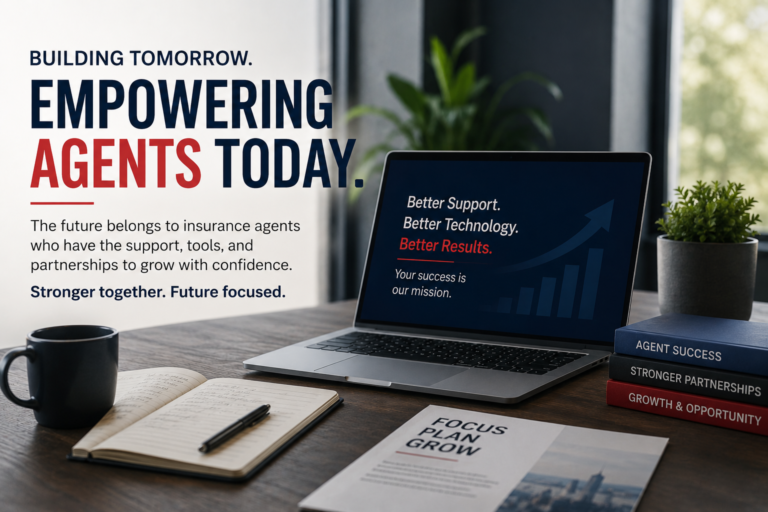
The agencies and agents who will win in the future are not simply better at selling. They are better at building systems, leveraging technology, creating infrastructure, and delivering a level of support and experience that transforms how business gets done. The industry is shifting from a production-based model to a platform-based model, and the agencies that recognize this shift early are positioning themselves to dominate.
At the center of this transformation is technology but not in the way most people think about it. It’s no longer about having a CRM or access to a quoting tool. Those are now baseline expectations. The real difference lies in how these tools are integrated into a unified system that actually drives behavior, automates processes, and creates consistency across an entire organization. Winning agencies are no longer operating on disconnected tools and spreadsheets. They are building internal operating systems centralized environments where everything from lead management and enrollment to retention and commission tracking is connected and visible.
This kind of infrastructure fundamentally changes how an agency operates. It reduces inefficiencies that quietly drain productivity, eliminates gaps in follow-up that cost sales, and gives leadership real-time visibility into performance. Instead of reacting to problems, these agencies can anticipate them. Instead of relying on individual discipline, they rely on structured workflows. The result is not just higher production, but scalable production something most agencies struggle to achieve.
Alongside technology, the role of agent support has taken on a completely new level of importance. For years, the industry operated under the assumption that commission levels were the primary driver of agent decisions. While compensation still matters, it is no longer the deciding factor it once was. Agents today are far more focused on whether an agency can actually help them grow. They want to know how quickly they can get up and running, what kind of support they will receive when issues arise, and whether they have access to the tools and resources needed to compete in an increasingly complex market.
This shift is subtle but powerful. It means agencies can no longer rely on offering competitive contracts alone. They must deliver a complete experience. That includes structured onboarding that shortens the learning curve for new agents, responsive internal teams that handle contracting, commissions, and service issues efficiently, and ongoing training that evolves with the market. It also includes marketing support something that has become critical as client acquisition becomes more competitive and more expensive.
Agents are no longer comparing agencies based solely on numbers; they are evaluating them the same way someone would evaluate a business platform. They are asking whether the environment will allow them to scale, whether they will be supported when challenges arise, and whether the agency is investing in their long-term success. Agencies that can confidently answer those questions are the ones that will attract and retain top talent.
At the same time, carrier relationships and contract structures are becoming an increasingly important factor in determining which agencies thrive. Not all contracts are created equal, and the difference between average and top-tier contracts has a compounding effect over time. Agencies with strong carrier alignment have access not only to better compensation, but also to better products, faster issue resolution, and deeper insight into market changes. They are able to position their agents more effectively and respond to shifts in the industry with greater agility.
This advantage becomes even more significant as margins tighten and compliance requirements increase. Agencies operating with weaker contracts or limited carrier access will find it harder to compete, not just in terms of income, but in terms of the overall value they can offer their agents. In contrast, agencies that have invested in building strong carrier relationships will have a foundation that supports long-term growth.
Perhaps the most important transformation happening in the industry is the shift from a sales-driven mindset to a lifecycle-driven mindset. Historically, success was measured by how many policies were written. Today, success is increasingly measured by how many clients are retained, how effectively they are managed over time, and how much value is generated from each relationship. This shift is being driven by a combination of factors, including regulatory pressure, increased plan competition, and the growing importance of client experience.
Agencies that understand this are building systems designed not just to acquire clients, but to keep them. They are implementing structured retention strategies, automating communication throughout the year, and using data to identify opportunities for cross-selling and policy optimization. Instead of viewing each sale as a transaction, they are treating each client as a long-term asset. This approach creates more stable revenue, reduces the impact of market fluctuations, and strengthens the overall business.
Technology plays a critical role here as well, particularly in the form of data and automation. The ability to track client behavior, identify risks, and trigger timely outreach allows agencies to operate proactively rather than reactively. It also enables them to scale retention efforts in a way that would be impossible through manual processes alone. As this capability becomes more widespread, agencies that fail to adopt it will find themselves at a significant disadvantage.
Another major factor shaping the future of the industry is the way business is generated. The traditional model of relying heavily on purchased leads is becoming less effective as costs rise and competition increases. In its place, a new model is emerging one focused on controlling distribution and building brand-driven demand. Agencies that invest in digital marketing, content creation, community engagement, and strategic partnerships are creating their own pipelines rather than depending entirely on third-party sources.
This shift not only reduces acquisition costs over time but also improves conversion rates and client trust. When clients come to an agency through its own channels whether through online content, local events, or referrals they arrive with a level of familiarity and confidence that makes the sales process more effective. Over time, this creates a compounding advantage that is difficult for competitors to replicate.
Artificial intelligence is accelerating all of these trends. It is not replacing agents, but it is redefining what it means to be effective. Tasks that once required significant time and effort such as follow-ups, scheduling, and basic service interactions are increasingly being automated. This allows agents to focus on higher-value activities, such as building relationships and handling more complex cases. The result is a significant increase in productivity for those who know how to leverage these tools.
However, this also creates a divide. Agents who embrace these changes will be able to operate at a much higher level, while those who resist them will struggle to keep up. The same is true for agencies. Those that invest in technology and integrate it into their operations will gain a significant edge, while those that do not will find themselves falling behind.
All of these factors point to a clear conclusion: the future of the insurance industry belongs to agencies that think and operate differently. They are not simply sales organizations; they are platforms. They combine technology, support, data, and strategic relationships into a cohesive system that drives growth at scale. They understand that success is not just about what happens at the point of sale, but what happens before and after it.
Over the next few years, the industry will likely see increased consolidation, with stronger agencies expanding their reach while weaker ones struggle to compete. The expectations placed on agents will continue to rise, and the resources required to meet those expectations will become more complex. In this environment, the agencies that have invested in building real infrastructure will stand out clearly.
The reality is that the shift is already happening. The agencies that are winning today are not relying on luck or short-term momentum. They are building with intention, focusing on long-term scalability, and creating environments where agents can succeed consistently. They are treating their organizations not just as businesses, but as platforms designed for growth.
For agents, this means choosing the right environment will become more important than ever. For agency owners, it means the decisions being made today about technology, support, contracts, and strategy will determine where they stand in the years ahead.
The future is not uncertain. It is already taking shape. And the agencies that recognize what is changing, and act on it, are the ones that will define what the industry looks like next.
Your Next Level Starts Here
Ready To Grow Your Medicare Business The Right Way?
Join Advantage Plus and plug into a system built for serious Medicare agents. Get access to top-tier contracts, daily training, real compliance support, and a platform designed to help you grow your book the right way without giving up control of your business.
Book a Demo