
What It Meant to Be an Insurance Agent in 2016 vs. 2026
A Complete Breakdown of How the Agent Role Has Transformed Over the Last Decade
Over the last ten years, the insurance industry hasn’t just evolved, it has completely redefined what it means to be an agent.
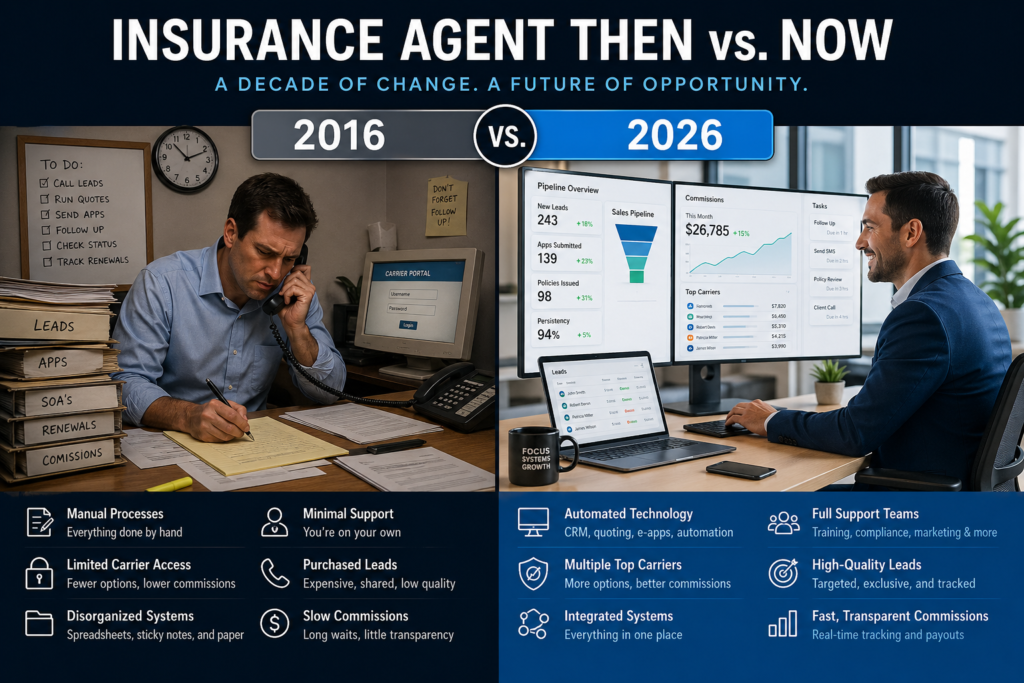
In 2016, success was built on hustle, persistence, and the ability to grind through inefficiencies.
In 2026, success is built on systems, infrastructure, positioning, and speed.
This shift has created a clear divide:
Agents who adapted and agents who didn’t.
Let’s break down what really changed.
Technology: From Manual Chaos to Integrated Ecosystems
In 2016, technology was not a competitive advantage, it was a frustration.
Agents were forced to operate across disconnected systems that didn’t communicate with each other. A typical workflow required logging into multiple carrier portals just to run quotes, manually entering the same client information repeatedly, and printing out applications that needed to be signed, scanned, and re-uploaded.
Even something as simple as tracking a client interaction required discipline, because there was no centralized system doing it for you. Most agents relied on memory, handwritten notes, or spreadsheets that quickly became outdated.
Scope of Appointment compliance, which is now strictly regulated and digitally tracked, was often handled loosely. This exposed agents to compliance risk even if they were trying to do the right thing.
Fast forward to 2026, and technology is no longer just a tool it’s the foundation of the business.
Today’s agent operates inside a connected ecosystem where:
- Client data flows automatically from lead to enrollment
- Quotes are generated across multiple carriers in seconds
- Enrollments are completed digitally with built-in compliance safeguards
- Follow-ups are triggered automatically based on client behavior
Artificial intelligence is now layered on top of these systems, assisting with:
- Data entry
- Communication workflows
- Client segmentation
- Retention strategies
What used to take hours of manual effort now happens in real time.
The result isn’t just efficiency it’s consistency and scalability.
Contracts & Carrier Access: From Gatekeeping to Strategic Alignment
In 2016, access to strong contracts was one of the biggest barriers in the industry.
Most agents didn’t fully understand their commission levels or contract terms. They were often brought into organizations with little transparency and had limited leverage to negotiate better deals.
Captive environments were common, and even independent agents were frequently restricted to a narrow set of carriers. If you wanted higher commissions or better products, you needed production and getting that production without access was a catch-22.
Many agents spent years unknowingly earning below their potential.
In 2026, access has dramatically expanded.
Agents can now:
- Contract with multiple top-tier carriers
- Operate across multiple states
- Maintain ownership of their book of business
- Compare contract levels across organizations
However, this shift created a new challenge: too many options without enough guidance.
Today, success isn’t about just getting contracted it’s about:
- Choosing the right hierarchy
- Understanding release policies
- Aligning with organizations that provide real value beyond contracts
The modern agent must think like a business owner, not just a producer.
Because the wrong alignment in 2026 can cost far more than a low contract ever did in 2016.
Support Systems: From Isolation to Full-Scale Infrastructure
In 2016, support was inconsistent and often unreliable.
Agents depended heavily on uplines who were usually focused on their own production. If you had a problem whether it was underwriting, commissions, or client service you were largely on your own.
Carrier support lines were slow, and internal agency infrastructure was minimal. There were no dedicated teams handling onboarding, compliance, or retention.
This created a high failure rate among new agents, not because they lacked ability but because they lacked support.
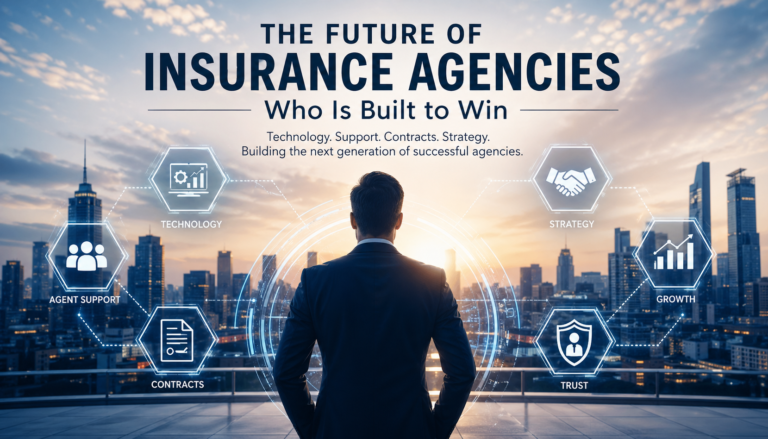
In 2026, support has become one of the biggest differentiators between agencies.
Top organizations now provide layered infrastructure, including:
- Dedicated onboarding teams that guide agents step-by-step
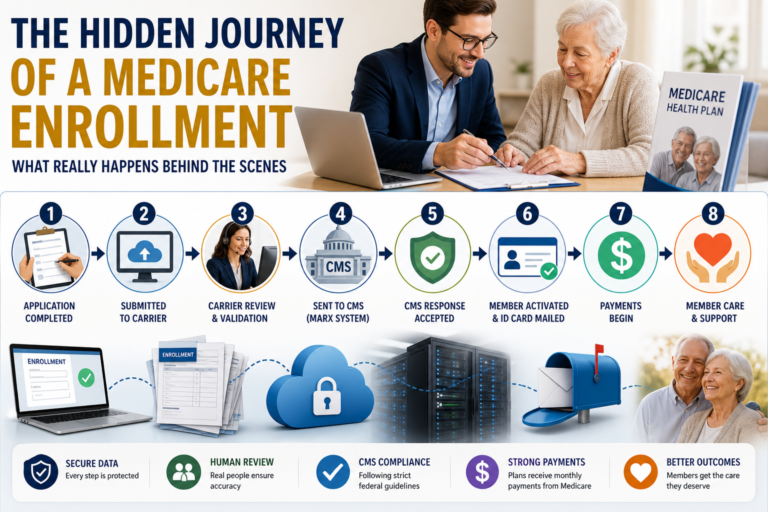
- Compliance departments ensuring agents stay within CMS guidelines
- Commission teams that audit and reconcile payments
- Member service teams that handle post-enrollment issues
This shift allows agents to focus on what actually drives revenue:
building relationships and growing their book of business.
The difference is night and day.
Agents who plug into real support systems scale faster, retain more clients, and avoid costly mistakes.
Lead Generation & Marketing: From Cold Calls to Conversion Systems
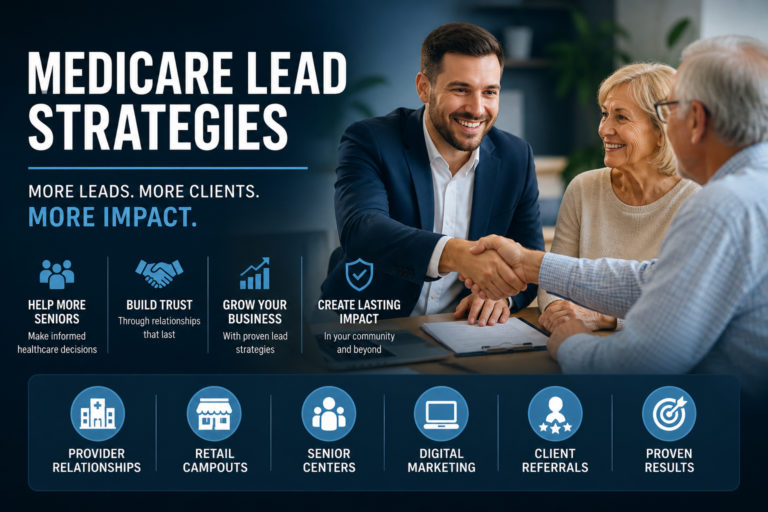
Lead generation in 2016 was transactional.
Agents bought leads often recycled and worked them aggressively. There was little control over quality, and even less visibility into performance.
There were no funnels, no automation, and no structured follow-up systems.
If you didn’t reach a lead within minutes, your chances dropped dramatically. And once a lead went cold, it was usually lost for good.
Marketing was reactive, not strategic.
In 2026, marketing has evolved into a system-driven discipline.
Agents now operate with:
- Multi-channel advertising (Facebook, Google, YouTube)
- Automated follow-up sequences (SMS, email, voicemail drops)
- CRM-triggered workflows based on behavior
- Retargeting campaigns that keep prospects engaged
Leads are no longer one-time opportunities they are part of a lifecycle.
A prospect who doesn’t convert today can still convert months later through consistent nurturing.
At the same time, consumer expectations have shifted dramatically. Clients expect:
- Immediate responses
- Clear communication
- Digital convenience
Agents are no longer just competing with each other—they are competing with technology itself.
Commissions & Revenue Model: From Guesswork to Data Visibility
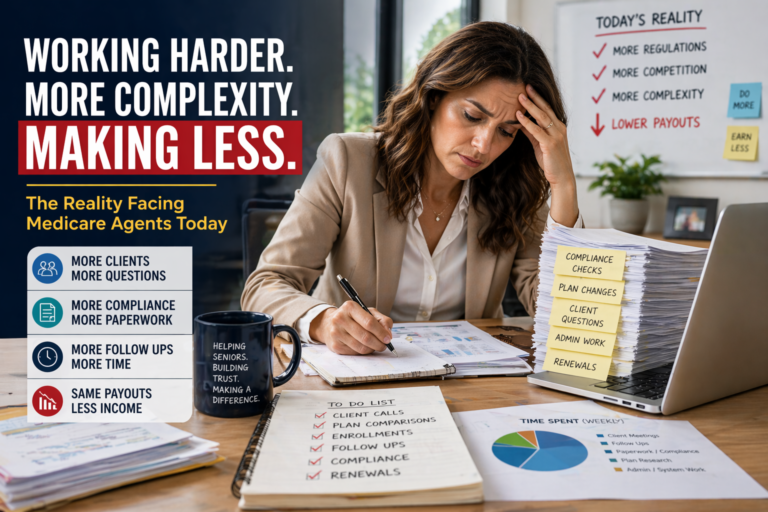
In 2016, commissions were one of the most frustrating parts of the business.
Agents often didn’t know:
- When they would get paid
- How much they were owed
- Whether their renewals were accurate
Chargebacks could hit unexpectedly, and there was little transparency into why.
Many agents operated on trust rather than verification.
In 2026, commission tracking has become far more transparent and structured.
Agents now have access to:
- Real-time dashboards
- Detailed commission statements
- Visibility into renewals and persistency
- Performance analytics across their book
However, the business model itself has also matured.
The focus has shifted from:
“How many apps did you write?” → “How strong is your book?”
Retention, persistency, and client experience now play a major role in long-term income.
Agents who build stable books generate predictable revenue.
Those who don’t remain stuck chasing new sales.
Staffing & Business Infrastructure: From Solo Operator to Scalable Enterprise
In 2016, most agents operated alone.
Even high producers struggled to scale because they lacked systems. Hiring additional agents often created more problems than it solved, because there was no infrastructure to support growth.
Training was inconsistent. Processes weren’t documented. And growth relied heavily on the agent’s personal effort.
In 2026, scalable infrastructure has become the foundation of growth.
Modern agencies are built with:
- Defined onboarding systems
- Standardized workflows
- CRM-driven operations
- Internal teams supporting every stage of the business
Even individual agents now operate with leverage:
- Virtual assistants
- Automated systems
- Centralized data
This allows agents to grow without burning out.
The question is no longer:
“How hard can you work?”
It’s:
“How well is your system built?”
The Bottom Line: A Completely Different Profession
The transformation from 2016 to 2026 is not just about improvement, it’s about reinvention.
The role of the agent has shifted from:
- Manual → Automated
- Isolated → Supported
- Transactional → Strategic
- Reactive → Predictable
And with that shift comes a new reality:
The barrier to entry is lower but the standard to succeed is higher.
Final Thought: The Agents Who Win in 2026
The agents thriving today are not necessarily the ones who have been in the industry the longest.
They are the ones who:
- Embrace technology
- Align with the right infrastructure
- Focus on long-term value, not short-term sales
- Operate like business owners, not just producers
Because in today’s environment…
You’re not just an agent anymore.
You’re running a system.
And the strength of that system determines everything.
Your Next Level Starts Here
Ready To Grow Your Medicare Business The Right Way?
Join Advantage Plus and plug into a system built for serious Medicare agents. Get access to top-tier contracts, daily training, real compliance support, and a platform designed to help you grow your book the right way without giving up control of your business.
Book a Demo