
How Medicare Agents Can Build a Strong Personal Brand and Create Long Term Growth
Introduction
The Medicare industry has become one of the most competitive spaces in insurance. Growth in enrollment has attracted more agents, more marketing organizations, and significantly more advertising. At the same time, beneficiaries are more cautious and more informed than ever before. They are no longer choosing an agent based solely on who reached them first. They are choosing based on who they trust.
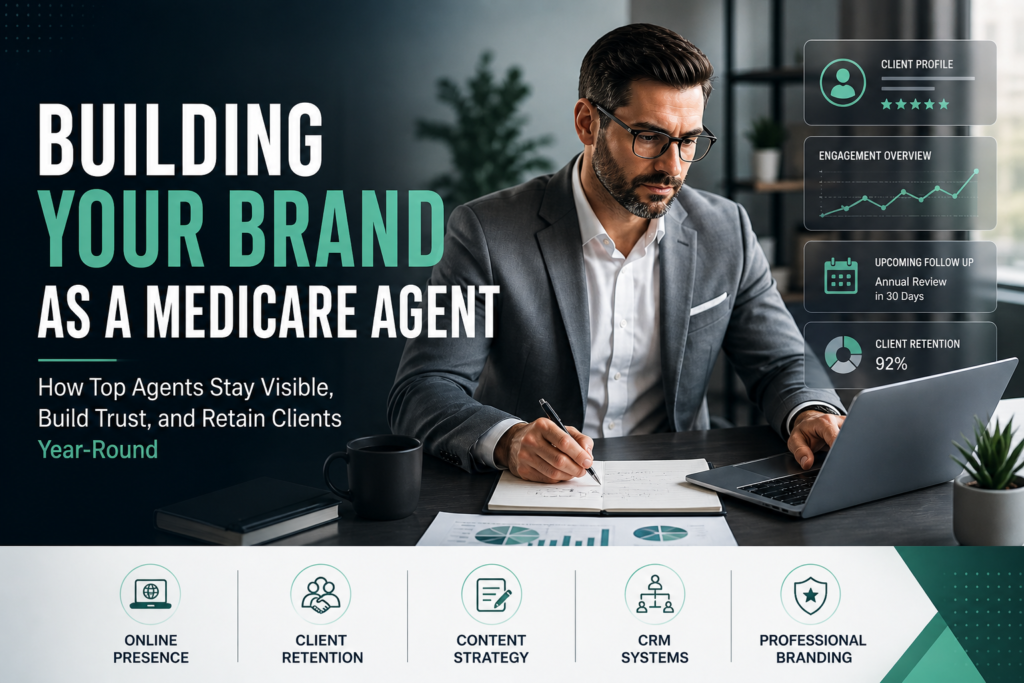
This shift has changed what it takes to succeed. Product knowledge and carrier access are still important, but they are no longer enough on their own. The agents who continue to grow year after year are the ones who have built a strong personal brand. They are recognizable in their market, consistent in their communication, and viewed as a reliable source of guidance rather than just another salesperson.
A personal brand is not built overnight, and it is not limited to logos or design. It is built through repeated, consistent interactions that shape how people perceive you. In a space where trust directly impacts both enrollment and retention, that perception becomes one of the most valuable assets an agent can have.
Why Personal Branding Matters in Today’s Medicare Market
The growth of Medicare Advantage has intensified competition across the country. According to the Kaiser Family Foundation, more than half of all Medicare beneficiaries are now enrolled in Medicare Advantage plans, representing over 30 million people. This number continues to increase each year, bringing more opportunity but also more noise.
Beneficiaries today are exposed to multiple touchpoints. They receive mailers, phone calls, television ads, and digital campaigns. Many of them speak to multiple agents before making a decision. In this environment, differentiation is critical. When multiple agents are offering similar plans, the deciding factor often becomes who feels more credible and more trustworthy.
This is where branding plays a direct role. A strong personal brand creates familiarity before the first conversation. It reduces skepticism and positions the agent as a professional rather than a solicitor. Over time, it also leads to stronger retention, as clients are less likely to leave an agent they feel connected to.
Understanding What a Personal Brand Actually Represents
Many agents misunderstand branding because they associate it with visuals alone. While appearance does play a role, a personal brand is primarily built through behavior and consistency. It reflects how you communicate, how you follow up, how you educate your clients, and how you handle problems.
A strong brand answers key questions in a prospect’s mind without needing to be asked. It communicates who you help, how you help them, and what they can expect from working with you. It also signals professionalism through tone, responsiveness, and attention to detail.
Over time, these elements create a reputation. That reputation becomes scalable. It influences referrals, online perception, and even how carriers and partners view your business. Agents who understand this treat every interaction as part of their brand, not just the moments when they are actively selling.
Building a Professional Online Presence
In most cases, the first impression of an agent happens online. Whether through a referral or a search, prospects often look up an agent before engaging. What they find during that search can either reinforce credibility or raise concerns.
A strong online presence does not require complexity, but it does require clarity and consistency. A professional LinkedIn profile should clearly communicate your role in the Medicare space and who you serve. It should avoid generic titles and instead focus on the value you provide. A clean headshot and a well written summary can significantly improve how you are perceived.
A simple website also plays an important role. It should provide a clear explanation of your services, your areas of focus, and how someone can contact you. Including educational content can further strengthen your position by demonstrating knowledge and willingness to help without immediate pressure.
Local visibility is equally important. A Google Business profile allows you to appear in local searches and collect reviews from clients. Reviews serve as social proof and often influence decisions more than direct marketing. Agents who actively manage their online presence tend to build trust faster and convert more opportunities into clients.
Using Content to Build Trust and Authority
Content is one of the most effective ways to build a brand over time. It allows agents to demonstrate knowledge, communicate clearly, and stay visible without direct selling. The goal of content is not volume, but consistency and relevance.
Educational content performs particularly well in the Medicare space. Beneficiaries are often confused by enrollment periods, plan differences, and coverage details. Agents who simplify these topics position themselves as trusted resources. This type of communication builds familiarity, and familiarity reduces resistance.
Content can take many forms, including short videos, written posts, or email updates. What matters most is that it reflects real knowledge and addresses real concerns. Over time, consistent content creates a perception of authority. When a prospect eventually needs help, they are more likely to reach out to someone they have already seen providing value.
Retention as a Core Part of Your Brand
One of the most overlooked aspects of branding is retention. Many agents focus heavily on acquisition but fail to maintain consistent communication after enrollment. This creates gaps in the relationship and increases the likelihood of losing clients.
Retention is not just an operational function. It is a branding function. It reflects how committed you are to your clients beyond the initial sale. Agents who maintain regular contact, provide updates, and check in periodically are perceived as more reliable and more invested.
Technology plays an important role in this process. Customer relationship management systems allow agents to track important dates, monitor interactions, and automate reminders. Platforms such as GoHighLevel and HubSpot are widely used to support these efforts. However, the effectiveness of any system depends on consistent use.
Simple touchpoints can make a significant difference. A birthday message, an annual review reminder, or a follow up after enrollment reinforces the relationship. Over time, these actions build loyalty and increase referrals, both of which are critical for long term growth.
What Top Agents Do Differently
There is a consistent pattern among agents who continue to grow regardless of market conditions. They focus on building a presence rather than chasing individual transactions. They prioritize clarity in their messaging and consistency in their actions.
Top agents remain visible throughout the year. They do not disappear after enrollment periods. They continue to educate, communicate, and engage with their clients. They also invest in their professional image, understanding that perception influences trust.
Another key difference is their approach to relationships. Instead of treating each client as a one time transaction, they treat each relationship as long term. This mindset influences how they communicate, how they follow up, and how they structure their business. Over time, this approach creates stability and reduces reliance on constant lead generation.
Common Mistakes That Limit Growth
Many agents struggle with branding not because it is complicated, but because it is inconsistent. One of the most common mistakes is waiting for everything to be perfect before taking action. This often leads to delays and missed opportunities.
Another mistake is focusing too heavily on short term sales tactics without building a foundation. While aggressive marketing can generate immediate results, it does not create long term loyalty. Without a clear brand, agents remain replaceable in the eyes of their clients.
Lack of follow up is another major issue. Failing to maintain communication after enrollment weakens relationships and increases the risk of losing clients. Over time, this leads to a cycle where agents must constantly replace lost business instead of building on existing relationships.
Conclusion
The Medicare market will continue to grow, but so will competition. Agents who rely solely on traditional methods will find it increasingly difficult to stand out. Those who invest in building a strong personal brand will create a significant advantage.
A well developed brand builds trust before the first conversation, strengthens relationships after enrollment, and creates long term stability. It allows agents to move beyond transactional sales and build a business based on consistency and credibility.
The agents who understand this are not just growing faster. They are building businesses that last.
Your Next Level Starts Here
Ready To Grow Your Medicare Business The Right Way?
Join Advantage Plus and plug into a system built for serious Medicare agents. Get access to top-tier contracts, daily training, real compliance support, and a platform designed to help you grow your book the right way without giving up control of your business.
Book a Demo